
Lessons We've Learned
Questions to Ask Aging Parents — Without Making Them Feel Like You’re Taking Over
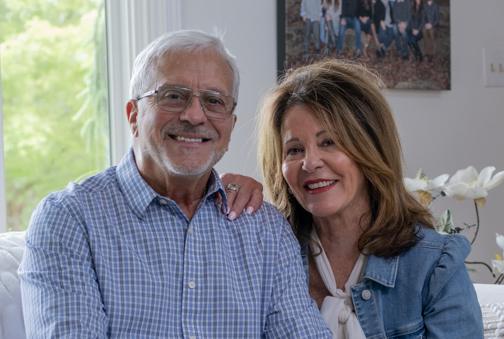 Larry and Rita Vest5 min read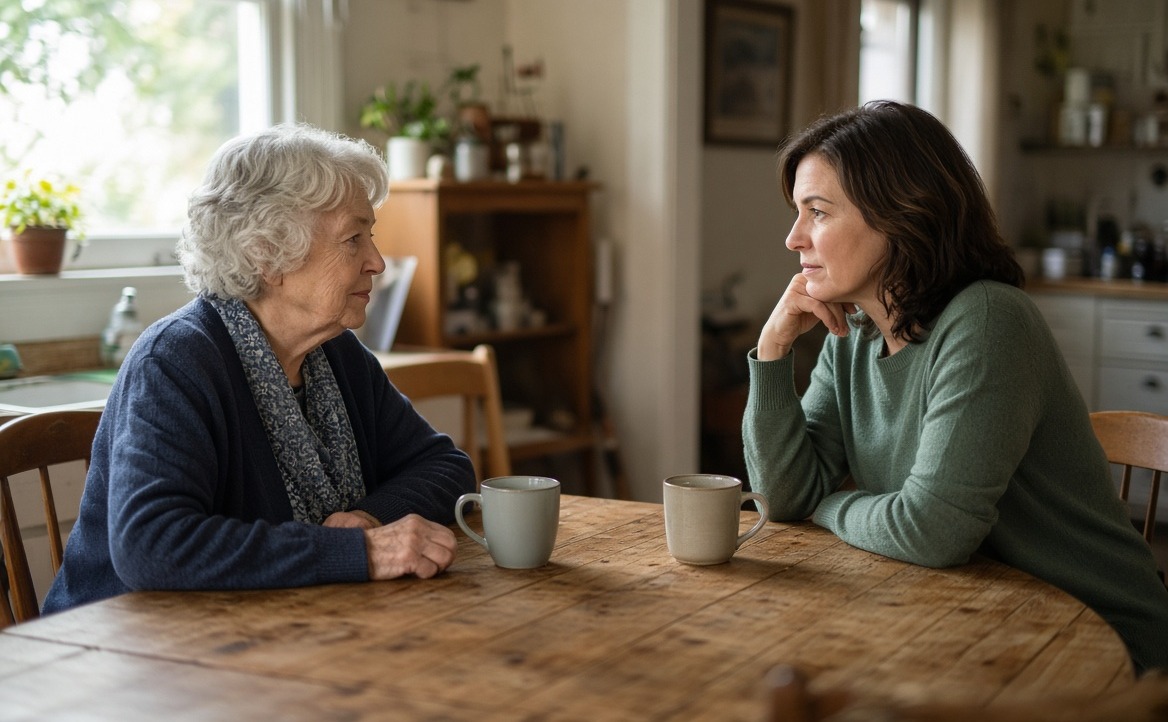
There comes a point with aging parents when you begin noticing little things.
At least, that is how it happened with us.
With my mom, it wasn’t one dramatic event that suddenly told us something had changed.
She fell once. She thought she had just tripped.
Another time, I watched her wipe off a table. My mother had always been a clean freak. But instead of picking up the crumbs, she simply wiped everything onto the floor.
Then one day she asked me where my dad was.
He had been gone for ten years.
Rita experienced something different with her mother.
After Rita’s father died, she discovered how much of their everyday financial life had been handled by him. Her mother knew very little about the household bills. Nothing was on AutoPay. Bills came in the mail and were paid by check.
So Rita began going through the files.
What was due?
What could be put on AutoPay?
How much would her mother need each month?
And every answer seemed to uncover another question.
Rita still describes it this way:
I can’t even start to tell you how much time it took me to unravel everything.
Neither of us was trying to take over our parents’ lives.
We were trying to help.
Looking back, though, we realize there is a much better time for families to have these conversations:
Before somebody has to unravel everything.
Start by asking, not taking
Your parents have spent their entire adult lives making their own decisions.
They raised children. Paid bills. Bought homes. Went to doctors. Managed careers. Solved problems.
Then, little by little, the roles can begin to change.
That can be difficult for everybody.
So I would not start with:
“We need to get your affairs in order.”
And I certainly would not arrive with a three-ring binder and a checklist.
Start with one question.
If something happened and I needed to help you for a few weeks, what would I need to know?
Or:
Is there anything you handle now that we wouldn’t know how to take care of for you?
Then listen.
You do not need to organize their entire life in one afternoon.
Talk about bills one day. Doctors another. Maybe eventually ask where the important papers are kept.
This is not an interrogation.
It is a family conversation that may happen over months.
If staying home matters, start there
For many aging parents, one of the biggest fears may not be getting older.
It may be losing control because they are getting older.
Especially control over their home.
So instead of beginning with whether they should move, ask what would help them stay.
What is getting harder around the house?
Would a grab bar make the bathroom safer?
Who has a key if they need help?
Is there someone nearby they trust?
What kind of help would feel helpful — and what would feel like somebody else had taken over?
You might simply ask:
If staying here is what you want, what could we do to make that easier for you?
That is a very different conversation from:
“You shouldn’t be living here anymore.”
If staying home really is important to them, write that down.
Not as a promise that circumstances will never change.
As a preference the family should understand and respect for as long as reasonably possible.
And underneath the question about the house is an even bigger question:
What does a good ordinary day look like to them?
What do they still want to do for themselves?
What kind of help would they welcome?
What would feel intrusive?
If they could no longer make medical or financial decisions, whom would they trust to decide the way they would?
Those answers tell you more than a folder full of paperwork.
The paperwork only helps the family carry out the wishes.
Know enough to help
Families often assume everybody already knows the ordinary details.
Usually, we don’t.
Who is the primary doctor?
Which pharmacy do they use?
What medications do they take?
Are there allergies?
Is there a condition an emergency room would need to know about tonight?
Where is the healthcare directive?
Then there are the important documents.
Where is the will?
Is there a trust?
Who has power of attorney?
Is there life insurance?
Long-term care coverage?
Who prepares the taxes?
Have funeral or burial arrangements already been made?
You do not necessarily need copies of everything.
You need to know that the documents exist and where they can be found.
“The original is in the safe.”
“Our attorney has it.”
“It’s in the second drawer of the filing cabinet.”
That little piece of information could save someone hours — or days — later.
And don’t forget the ordinary Tuesday.
Who has a house key?
Who feeds the dog?
What does the dog eat?
Which bills are on AutoPay?
Which still need to be paid manually?
Where does the mail go?
Who is the attorney?
The CPA?
The financial advisor?
The neighbor they trust?
Sometimes one name and a phone number are worth more than another stack of paperwork.
Probate can wait. The dog cannot.
You don’t need all their secrets
This became one of the ideas behind MyRegistr.
We don’t think being prepared means every family member needs everybody else’s passwords, full bank account numbers or Social Security numbers.
Most of the time, you simply need to know what exists.
There is an account at this institution.
There is a life insurance policy with this company.
The attorney is this person.
The original will is kept here.
The IRA ends in these four digits.
That is enough to give someone a place to begin.
A map, not a vault.
The purpose is not to collect every secret in someone’s life.
It is to keep the people who love them from having to reconstruct that life from scratch.
That philosophy eventually became a big part of how we built MyRegistr.
Be careful with the words you use
Sometimes the worry is reasonable.
The words are what cause the problem.
There is a big difference between:
“You can’t do that anymore.”
and:
I’m worried about this particular thing. Can we figure out a way to make it safer?
There is a difference between:
“You shouldn’t be living alone.”
and:
What would make it easier for you to keep living the way you want?
And there is certainly a difference between:
“Give me your passwords.”
and:
I don’t need your passwords. I just want to know what exists and where we would go if we ever needed to help.
The first version sounds like control.
The second sounds like preparation.
And if your parents do not want to talk about it?
Don’t force it.
Ask one question.
Leave it alone.
Come back another day.
They may simply need time to understand that you are not trying to take something away from them.
When there is more than one child
Rita and I have three children. We now have thirteen grandchildren and four great-grandchildren.
One thing life has taught us is that families get complicated.
Often one child becomes the person who handles things.
Maybe that child lives closest.
Maybe Mom calls that child first.
Maybe he or she knows the attorney or has been going to the doctor appointments.
Before long, that person understands things the other children don’t.
I’ve been that child.
I knew why something hadn’t been done yet. I knew what the attorney had said. I knew what needed to happen next.
My brother didn’t always know those things.
And in our family, misunderstandings surrounding an estate contributed to hard feelings that lasted for years.
I wish that had been different.
That experience is another reason I believe having a family map matters.
It doesn’t mean every child needs access to everything.
They don’t.
But important information shouldn’t exist only inside one person’s head.
Because when that happens, the person doing all the work can also become the person everyone else questions.
One Small Step
Do not show up Saturday morning determined to organize your parents’ entire life.
Ask one question.
Maybe: Who is your primary doctor?
Or: Where do you keep your will?
Or perhaps: If this house ever becomes difficult for you, what would you want us to know?
Listen to the answer. Write it down.
Another conversation can happen another day. That is enough.
Rita and I learned much of this by being on the other side of it — trying to figure things out after circumstances had already changed.
Now that we’re in our seventies, we also see it from our parents’ side.
We understand why independence matters.
We understand why nobody wants their children coming in and taking over.
And we understand something else:
Getting organized isn’t giving up control.
Done the right way, it is almost the opposite.
It is a way of telling the people who love you:
These are my wishes. These are the things I’ve put in place. And if you ever need to help me, this is where you start.
That may be one of the kindest maps we can leave them.
If you’d like to see how we designed MyRegistr to keep this kind of family map in one place — without requiring passwords or full account numbers — you can explore the demo. No email. No credit card. Nothing to set up.