
Lessons We've Learned
If Something Happened to Me, Would My Wife Know What Bills to Pay?
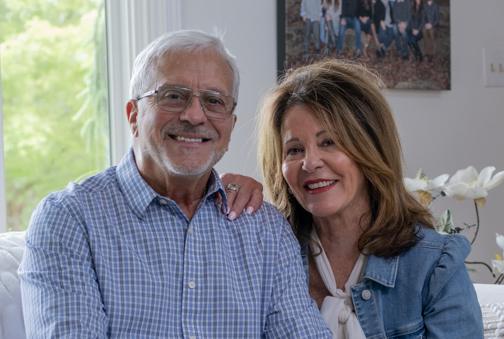 Larry and Rita Vest8 min read
For most of our 46 years of marriage, Rita and I have divided responsibilities the way a lot of couples do.
We also spent more than 40 years running the same business together.
Rita was president of the company and worked extensively in sales. That meant she was often out of the office—meeting with clients, developing business and traveling.
My responsibilities were different. I spent much more of my time in the office, usually in front of a computer.
We were running the same company. We just had different jobs to do.
Looking back, I think our household developed in much the same way.
We each had things that naturally became our things.
Because I was already sitting in front of a computer much of the day, it made sense for me to handle more of the banking, bills and financial administration at home.
It wasn't because Rita couldn't do those things. It was simply how we divided the work.
And it worked.
Maybe a little too well.
Because over the years, something happened that neither of us really intended:
The more responsibilities that became “my things,” the more information about those things lived with me instead of with both of us.
Eventually, Rita started asking questions.
“If something happened to you, how would I get into the checking account?”
“Which bills are paid automatically?”
“What bills do we have that I don't even know about?”
“How would I get into your computer?”
And I realized those were questions we needed to answer.
Dividing Responsibility Can Also Divide Knowledge
There's nothing wrong with dividing responsibilities.
In fact, it's one of the ways a marriage—or any partnership—works.
One person may handle the bills. The other may handle medical information. One knows the insurance. The other deals with the house. One talks to the accountant. The other keeps track of family schedules.
You don't both need to do everything.
But there's a difference between dividing responsibility and unintentionally dividing knowledge.
We discovered that difference when Rita and I started trying to organize our investments.
Some of our investments weren't simple accounts where you could pull up a statement and immediately understand what everything was worth.
Information was scattered.
There were files and websites. Statements and emails. K-1s that might arrive through email links. Passwords that had changed. Documents that had to be downloaded. Alternative investments whose values weren't always obvious.
For a while, Rita was trying to get it organized. Then I started helping.
We gathered what she had. I found what I had. We tracked down websites, statements and documents.
It took us weeks.
And I remember watching how much work it took and thinking:
Why is this this way? Why does it have to be so difficult?
Then something hit me.
This isn't the only thing that's like this. Everything in our life is like that.
And I remember thinking:
What would Rita do if she were by herself?
Rita Already Knew the Answer
That question wasn't theoretical for Rita.
She had already lived through something very similar.
After her father died, her mother knew very little about the household bills. Her father had handled them, and nothing was on AutoPay. Bills were paid by check.
Suddenly, Rita had to help her mother figure it all out.
She went through files trying to determine what bills existed. She had to figure out what was due and when.
Then she worked to determine what could be put on AutoPay and created a spreadsheet so her mother could understand how much money she would need each month—and how much she would have left to live on after the bills were paid.
But, of course, it didn't stop with the bills.
There was insurance. Death benefits. Health information. Financial accounts. One question led to another.
I can't even start to tell you how much time it took me to unravel everything.
Looking back, she wishes her father had left behind something as simple as a well-organized binder.
Not necessarily every sensitive piece of information. Just a map.
Here's what we have. Here's what gets paid. Here's where things are. Here's who you call.
It would have saved an enormous amount of time and heartache.
And today Rita recognizes the uncomfortable parallel. Her father handled many things for her mother. I handle many of those same things for Rita.
What Would Rita Actually Need to Know?
So I asked her.
If I died tomorrow, what would worry her?
Her first answer was the bills.
Which ones are on AutoPay? Which ones aren't? What bills exist that she may not even know about? What comes out of which bank account? Are there annual bills that won't show up for another six months?
Then there's the banking itself.
We have more than one bank relationship. There are business accounts. Credit cards. Investments. Would she even know every account she needed to look for?
And then there's a wonderfully ordinary problem that I hadn't given much thought to:
I use a PC. Rita is an Apple person.
My password manager and many of the things I use are on my computer.
So even if the information exists, Rita could face a learning curve just getting to it.
She might have to start calling banks and other institutions simply to figure out how to get access to things she never had a reason to access before.
And all of this would be happening at the worst possible time.
I would be brokenhearted. I wouldn't be thinking clearly.
That sentence stays with me.
Because that's precisely when I don't want my wife to have to become a detective.
Start With the Bills
You don't need MyRegistr to begin solving this problem.
Start with a conversation.
If one of you normally handles the household finances, sit down together and make a simple list.
For each recurring expense, identify:
- What is it?
- How often is it due?
- Is it paid automatically, or does someone need to take action?
- Where does the payment come from?
- About how much should you expect it to be?
- Who would you contact if there were a question?
And don't think only about monthly bills.
What about the $5,000 insurance premium that comes once a year? Property taxes? Memberships? Subscriptions? Professional fees? Business expenses?
The things that happen automatically can actually be some of the easiest things to overlook, because nobody has to think about them—until something changes.
That's when I realized:
Paying the bills isn't the same thing as organizing the bills.
The bills are truly organized when someone else could understand what needs to happen without reconstructing your system from scratch.
But Have You Thought About This?
Once you've made that list, ask one more question:
What else does our household depend on one of us knowing?
That's where this gets interesting.
Your spouse may now understand the bills. But would they know what insurance policies exist? Who your financial advisor is? Who handles your taxes? Which attorney to call? What bank and investment relationships exist? Where the important documents are? What major payments or renewals are coming? What accounts exist that they may never have had a reason to think about?
You don't need to create a hundred-item checklist tonight.
The point is simply to recognize the pattern.
If one person knows something important that the other person would need if they weren't there, that's information worth organizing.
The bills may simply be the first place you notice the problem.
What Taking Care of Rita Means to Me Now
Years ago, I thought taking care of my part of our marriage meant handling the responsibilities that had naturally become mine.
I still believe that. But my definition of taking responsibility has changed.
Today, I believe there's another part:
Making sure the person you love isn't left trying to figure everything out without you.
That's part of what eventually led Rita and me to MyRegistr.
MyRegistr isn't a bill-paying service. It isn't a budgeting app. And it isn't a password vault.
It's a way for us to create the map.
What exists? What needs attention? Who are the people involved? Where can important information be found?
Passwords and other sensitive credentials can remain where they belong—in an appropriate secure location. What matters is that the right person knows where to turn when they need something.
Because Rita doesn't need to know everything I know. And I don't need to know everything Rita knows. That's not how our marriage has ever worked.
The better question is:
If one of us weren't here tomorrow, could the other one find what they needed?
That's something we can prepare for.
One Small Step
One Small Step
Tonight, ask your spouse one question:
“If I weren't here tomorrow, what bill or financial obligation would you have no idea how to handle?”
Start with that one thing.
Then maybe ask another question:
“What else do I take care of that you wouldn't know how to find?”
You may discover, as Rita and I did, that the bills are only the beginning.
And Rita said something while we were talking about all of this that I think says it better than I can:
“If you can get organized, you should do it today. It is time-consuming, but it is time that you would be giving as a gift to somebody that's being left behind.”
After 46 years together, I can't think of a much better gift than that.